

Is Equitable Grading Good for Kids?
Is Equitable Grading Good for Kids?
,
Meeting Room 208/209
Despite the rise of “equitable” grading policies, including "no zeros", "unlimited retakes", and "no late penalties", it's far from clear that these policies benefit the students they aim to support. Drawing on nationally representative survey data, this session will highlight teachers’ perspectives on these policies, including concerns about their effects on student effort, academic expectations, and professional discretion. Following the presentation of those data, a panel of practitioners and thought leaders will discuss what the charter school movement can learn from this national debate. Participants will leave with actionable insights for shaping grading practices that uphold high expectations, support meaningful learning, and preserve teacher discretion.
Scroll down to view handouts.
Presenters
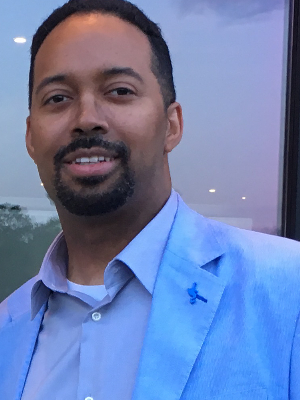
Head of School
Washington Latin Public Charter School
Peter Anderson is Head of Schools/CEO of Washington Latin Public Charter Schools, a leading non-selective charter school in Washington, D.C. With extensive experience as a school administrator, he has presented at conferences on topics including charter school governance, diversity and inclusion, and professional development. Peter is a Pahara Fellow, a Stanford EdLEADers alumnus, and serves on boards for various educational organizations. He is deeply committed to fostering flourishing learning environments for both students and educators
Head of Talent, Teaching, and Learning
Vertex Partnership Academy
Michael Farkosh began his career in public education in 2006 as a high school English teacher in a migrant farming community in Arizona with Teach For America. He’s been a founding teacher and leader at three New York City public schools and has taught grades 5-11. Michael led Girls Prep Bronx Middle School to a Recognition School designation — reserved for schools with achievement and growth in the top 15% in the state — before serving as the Director of Humanities for a network of schools. Immediately prior to joining Vertex, Michael led learning and development for the Brand team, with staff in 27 countries, at Accenture, a professional services consulting firm. He has an undergraduate degree in political science, magna cum laude, and two master’s degrees, in secondary education and urban education leadership. He's conversationally proficient in Spanish, French, and Portuguese.
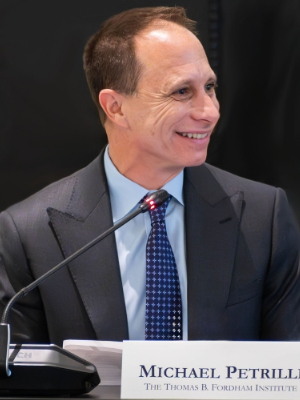
President
Thomas B. Fordham Institute
Michael J. Petrilli is president of the Thomas B. Fordham Institute, executive editor of Education Next, editor in chief of the Education Gadfly Weekly, host of the Education Gadfly Show podcast, and author of the SCHOOLED Substack. An award-winning writer, he is the author of The Diverse Schools Dilemma, editor of Education for Upward Mobility, and co-editor of How to Educate an American and Follow the Science to School. An expert on charter schools, school accountability, evidence-based practices, and trends in test scores and other student outcomes, Petrilli has published opinion pieces in the New York Times, Washington Post, Wall Street Journal, Bloomberg, and The Atlantic, and appears frequently on television and radio. Petrilli helped to create the U.S. Department of Education’s Office of Innovation and Improvement and the Policy Innovators in Education Network, and serves on the board of the Association of American Educators Foundation. He lives with his family in Bethesda, Maryland.
Handouts


Scroll down to view handouts.